2026 Redistribution Fund
How We Determined Eligibility
The 2026 Arts Capital | Atlanta Redistribution Fund is non-competitive: every organization that meets the eligibility criteria receives an unrestricted award.
That makes the criteria, and how we applied them, especially important. In the spirit of transparency, this page explains each step we used to decide which of this year's 223 applicants were eligible.
How the review worked
1. Published criteria
We posted the eligibility requirements the week before applications opened on October 1, 2026.
2. Review of every application
Staff checked each application against the criteria, including financial documents, IRS status, operating history, and public programs.
3. A chance to respond
Applicants with missing or unclear information were contacted and given time to provide it.
4. Committee rules
Our Redistribution Committee, a volunteer group with a majority of nonprofit leaders, set rules for situations the published criteria didn't fully address. Members did not vote on organizations they are affiliated with.
5. The same rules for everyone
Staff applied the committee's rules consistently to every application.
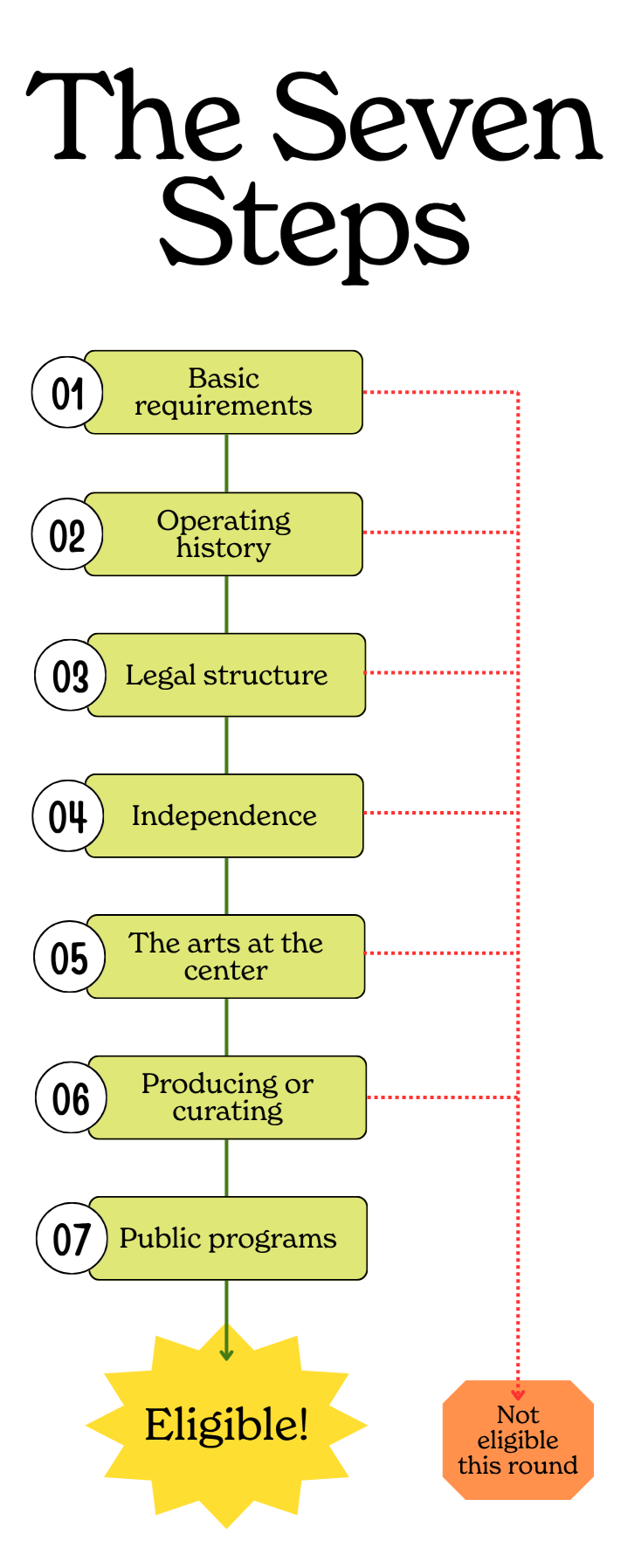
An organization that met every step was eligible. One that missed any step, or did not provide required information by the deadline, was not.
-
A 501(c)(3), or a project fiscally sponsored before the fund opened
Headquartered in and primarily serving the 11 counties of the Atlanta Regional Commission, with most programs in the region
Operating expenses between $5,000 and $15 million in the most recently completed fiscal year
A reviewed financial document from the past three years
A commitment to serving people without discrimination
-
At least three years operating as a nonprofit or under a fiscal sponsor
Time as a registered Georgia nonprofit counts, even before IRS tax exemption
Time as an informal group or a for-profit business does not count
-
Not a subsidiary of another organization or business
Supporting organizations are not eligible
LLCs are not eligible this cycle, even with a fiscal sponsor
If an organization's founder also owns a business, the nonprofit must keep separate finances, and any payments to the business must be for documented costs, such as rent
-
A government does not appoint most of the board or approve the budget
The organization does not run a government's own program or facility on its behalf
Funding designated specifically for the organization by a government is less than half of its revenue
Competitive public grants and leasing public space do not count against an applicant
Judged on the most recently completed fiscal year
-
Not an excluded type of organization: journalism, media, service, professional, funding, humanities, historic preservation, culinary, or fashion
Arts programs make up most of what the organization does. Who it serves doesn't matter: an organization serving young people or a specific community qualifies if its work is mainly arts.
Organizations offering the arts as one of several kinds of services, such as alongside sports or social services, are not eligible
Makerspaces, and schools offering a full academic program, are not eligible
History and culture organizations qualify if most of their public programming is arts
-
The organization creates or curates its own programs, such as performances, exhibitions, festivals, or series
A venue that mainly rents its space to others does not qualify
-
Three public arts programs from the past two seasons, which:
Were advertised and open to the public, whether free or ticketed
May include recitals and showcases, if advertised and open to the public
May include classes only alongside other public programs
May include school programs, but not as the organization's only activity
May include a single annual festival, if the organization's mission centers the arts
Do not include fundraising events or programs that are entirely online
What we found
Of the 223 organizations that applied, 174 were eligible and 49 were not.
Most applications that did not qualify missed a single step. The most common reasons:
The arts were not the organization's principal work (19). These were often organizations doing valuable community, youth, or education work in which the arts are one part of a broader mission.
An excluded type of organization (9). These included service, media, and funding organizations, which support the arts but do not present it themselves.
Legal structure or independence from government (8). These included LLCs, organizations closely tied to a for-profit business, and organizations that carry out programs on behalf of a city or county.
Fewer than three years of operating history (7). Several of these organizations will reach three years before the next cycle.
Budget size or location (5). These organizations either spent less than $5,000 in their most recent fiscal year or were based outside the 11-county region.
Required information not provided (1).
An eligibility decision is not a judgment of an organization's quality or the value of its work. It reflects only whether the organization fit the criteria for this fund, this year. Many of the organizations that did not qualify are doing important work, and we hope to see them apply again.
Common questions
-
The Redistribution Fund is meant to move resources to the region's arts organizations as a whole, not to pick winners. Every organization that meets the criteria receives an award, and no one's application is scored against anyone else's.
-
Every applicant who was missing information or whose situation was unclear had a chance to respond before the November 18 deadline. To treat all 223 applicants consistently and get funds out before the end of the year, decisions made after that point are final for this cycle.
-
The criteria were published before applications opened. During the review, some applications raised situations the criteria did not clearly address, such as how to count time as a registered Georgia nonprofit or how to assess organizations with close ties to a city. In those cases, the Redistribution Committee voted on how to apply the criteria, and that decision was then applied to every applicant in the same situation. These decisions are reflected in the steps above.
-
Yes. Eligibility is decided fresh each cycle, and organizations that did not qualify this year may qualify next year.
Looking ahead
This was the fund's first cycle, and it taught us a lot. Before the next cycle, the Redistribution Committee will review the criteria, including:
Whether and how LLCs with fiscal sponsors might qualify
How to define independence from government
How to treat organizations that use the arts alongside other kinds of work
How to make the requirements clearer before organizations apply
If you're planning to apply next time, a few things will make the process easier:
Keep your IRS and Georgia filings current. Your 501(c)(3) determination letter and your Georgia Secretary of State registration are the simplest proof of nonprofit status and history.
Keep your organization's money in its own account. Separate bank accounts and financial statements in your organization's name are the clearest way to show your budget.
Keep records of your public programs. Save flyers, event listings, ticketing pages, and social media posts with dates, so you can show what you presented and when.
Questions about eligibility can be sent to LauraH@ArtMattersAtlanta.org.