The 2026 Redistribution Fund: Everything you need to know before applying
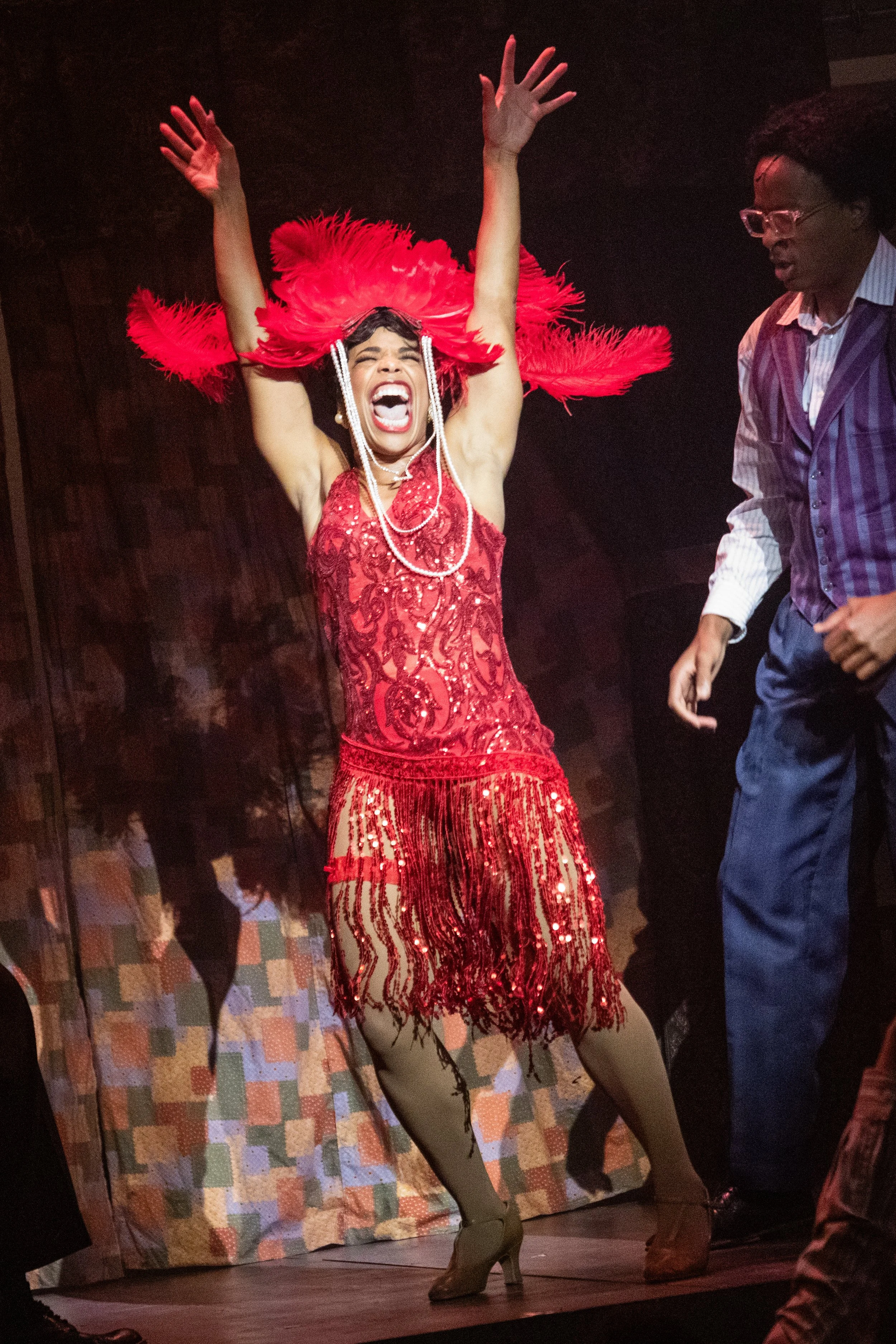
The Color Purple at the Aurora Theatre, an AC|A Cohort member.
Arts Capital | Atlanta’s 2026 Redistribution will provide unrestricted funding to eligible nonprofit arts organizations across Metro Atlanta. We’ve designed the process to be straightforward and accessible for organizations of different sizes and capacities.
Below you’ll find the full eligibility requirements, what you’ll need to complete the application, definitions of key terms, and answers to frequently asked questions. We encourage you to review this information before applying so you can determine whether your organization is eligible and gather the materials you’ll need.
Keep scrolling to learn more about:
Eligibility Requirements
Applicants must satisfy all of the following requirements.
Organizational Status: operate as either:
an independent 501(c)(3) nonprofit organization, or
an organization operating under an established* fiscal sponsorship arrangement that meets all other eligibility requirements.
Operating History: Have operated continuously for at least three years prior to the application deadline.
Mission: Have a primary organizational mission focused on the arts.
Public Programming: Present arts-based programming** for public audiences within Metro Atlanta.
Arts programming should represent the organization's principal public activity rather than a secondary or occasional component of its work.
Geography: Be headquartered in and primarily serve the eleven-county Atlanta Regional Commission service area.
Organizational Size: Have an annual operating budget between: $5,000 and $15,000,000
Annual operating budget is defined as total operating expenses from the organization's most recently completed fiscal year, excluding capital campaigns, capital projects, endowment gifts, and other one-time extraordinary revenue.
Independence: Not operate as a subsidiary of another educational institution, governmental entity, nonprofit organization, or for-profit company.
**Arts-Based Programming
Arts-based programming may include but is not limited to:
Folk & traditional arts (music, dance, theater, storytelling, and traditional crafts)
Literary arts (poetry, fiction, creative nonfiction, spoken word, and literary festivals)
Media arts (film, video, audio, animation, and digital media)
Multidisciplinary arts projects
Performing arts (dance, music, theater, musical theater, opera, storytelling, puppetry, comedy, and performance art)
Public art (murals, sculpture, public art installations, concerts, and performances)
Visual arts (painting, drawing, sculpture, printmaking, photography, ceramics, fiber arts, contemporary craft, design, architecture, and digital arts)
Eligibility Definitions

Soul Food Cypher, an AC|A cohort member
*Fiscal Sponsorship
Fiscal sponsorship is intended to provide an eligible nonprofit structure for organizations that operate for a charitable purpose but do not hold their own 501(c)(3) status. A fiscal sponsorship established solely for the purpose of applying for this funding opportunity does not meet this requirement. For-profit businesses, including LLCs operating as commercial enterprises, are not eligible.
Organizations and Activities Not Eligible
Body Art (face painting, body painting, tattoos)
Culinary Arts
Cultural attractions (zoos, botanical gardens, amusement parks)
Exclusively in-school based arts programs (e.g., high school bands, drama programs, etc.)
Fashion
For-profit Companies
Historic Preservation
Humanities (history, religion, philosophy, languages)
Individuals
Commercial interior decorating or beautification projects
Journalism
Magic shows, balloon twisters, parades, fireworks, reenactments
Martial Arts
Non-arts recreation (inflatable jumpers, petting zoos, 5K races, or other athletic events)
Professional Organizations (for example, American Institute of Graphic Arts (AIGA) or American Institute of Architects (AIA))
Sciences (physics, chemistry, biology, zoology, botany)
Service Organizations
Social Sciences (sociology, anthropology, economics, political science, geography)
Topiary or Landscape Art
What You’ll Need to Apply
We’ve designed the application to be straightforward and accessible for organizations of different sizes and capacities. There is no narrative grant proposal, and applications are not evaluated based on writing quality or artistic merit.
Before you begin, we recommend gathering the following information and materials.
Organization Information
You’ll be asked to provide basic information about your organization, including:
Legal name and Doing Business As (DBA), if applicable
Mission statement
501(c)(3) or fiscal sponsorship status
EIN or your fiscal sponsor’s EIN if applicable
Governance information: Whether your organization has a governing board of directors and, if so, the number of current voting board members.
Website and/or social media
Mailing address
Executive Director or equivalent contact information
Primary application contact, if different
Date of 501(c)(3) approval or fiscal sponsorship agreement
Fiscally sponsored organizations will also provide the name and contact information of their fiscal sponsor.
Representative Public Arts Programming
You’ll be asked to provide information about three representative public-facing arts programs your organization presented during the past two completed seasons or fiscal years.
For each, you’ll provide:
Program or event name
Date
Venue and county
Estimated attendance or participation
You’ll also provide photos, videos, or links that help verify your organization’s public-facing arts programming. These materials are used to confirm eligibility, not to evaluate the artistic quality of your work.
Optional: Help Us Tell the Story of Metro Atlanta’s Arts Community
You’ll have the option to share additional high-quality photos or videos that AC|A may use to celebrate and promote Metro Atlanta’s arts ecosystem.
This section is completely optional and will not affect your organization’s eligibility or award. If you choose to participate, you can provide photo or video credits, note any usage restrictions, and give AC|A permission to use the materials.
Financial Information
You’ll provide actual financial information for your two most recently completed fiscal years, including:
Operating revenue
Operating expenses
Annual surplus or deficit
For this application, operating revenue excludes extraordinary one-time funding such as capital campaigns, major capital projects, and endowment contributions.
You’ll also have an optional opportunity to provide context about your financial information if there is something you think we should understand.
Documents to Upload
Please have the following documents ready:
Proof of nonprofit status
IRS 501(c)(3) determination letter; or
Fiscal sponsorship agreement/Memorandum of Understanding
Financial documentation
For your most recently completed fiscal year only, upload one of the following:
Audited financial statements
CPA-reviewed financial statements
Compilation report
IRS Form 990 or 990-EZ
Internally prepared year-end financial statements signed by both the Executive Director (or equivalent) and Board Treasurer
Organizations that file a 990-N (e-Postcard) may still apply. Because the 990-N does not include the financial information needed to verify eligibility, you will also need to provide signed internally prepared year-end financial statements.
Eligibility Confirmation
Before submitting, you’ll be asked to confirm that your organization meets each of the published eligibility requirements and that it provides its benefits or services without regard to religion, race, color, national origin, sex, sexual orientation, gender identity or expression, age, or disability.
You’ll also certify that the information in the application is accurate and that you are authorized to submit it on behalf of your organization.
Grant Recipient Expectations
Recipients agree to:
Maintain an updated organizational profile with AC|A.
Participate in the annual benchmarking survey distributed by AC|A.
Respond to AC|A advocacy alerts as appropriate.
Submit any required grant follow-up information.
Fund FAQ
-
Arts Capital | Atlanta's Redistribution Program provides unrestricted financial support to eligible nonprofit arts organizations throughout Metro Atlanta. Funding from philanthropic partners is pooled and redistributed across the region using a methodology developed with input from nonprofit arts organizations. The 2026 redistribution is the first cycle of this program and will also help AC|A learn and improve the process for the future.
-
No. Organizations are not competing against one another based on artistic quality, the strength of their application, or which organizations are considered most deserving. Applications are reviewed to determine whether organizations meet the published eligibility requirements. The goal is to distribute resources broadly across Metro Atlanta's nonprofit arts ecosystem. All eligible organizations will receive a share of the pooled fund.
-
More than $1 million has been contributed to AC|A's pooled fund for the inaugural redistribution.
-
Individual awards will depend on the total funding available and the number of organizations determined to be eligible. AC|A expects awards to be approximately $2,000–$5,000. Final awards will be calculated after eligibility has been determined for the full applicant pool.
-
Eligible applicants must meet all published eligibility requirements, including nonprofit or fiscally sponsored status, at least three years of continuous operation, a primary mission focused on the arts, public-facing arts programming, location and service within the 11-county Metro Atlanta region, an annual operating budget between $5,000 and $15 million, and organizational independence.
-
Cherokee, Clayton, Cobb, DeKalb, Douglas, Fayette, Forsyth, Fulton, Gwinnett, Henry, and Rockdale counties.
-
Yes. Applicants must be headquartered in and primarily serve the 11-county Atlanta Regional Commission region.
-
The 11-county region was established by participating arts organizations early in the development of Arts Capital | Atlanta. We wanted to define a shared geography that reflected how the region functions while also aligning with existing data sources, particularly the Atlanta Regional Commission, so we could compare AC|A's research with other regional information over time.
At the time, Georgians for the Arts was also leading statewide arts advocacy and sector-building efforts. AC|A intentionally chose a regional focus so we could complement, rather than duplicate, that work. The 11-county footprint gives us a consistent boundary for research, funding, advocacy, and collaboration while allowing AC|A to focus deeply on the needs of Metro Atlanta's arts ecosystem.
-
Yes. Organizations operating under an established fiscal sponsorship arrangement may apply as long as they meet all other eligibility requirements. Fiscal sponsorship alone does not make an organization eligible.
-
No. Fiscal sponsorship is intended to make this opportunity accessible to nonprofit arts organizations that operate under an established fiscal sponsor rather than holding their own 501(c)(3) status. The fiscal sponsorship relationship must have been in place before this funding opportunity was announced. An organization may not establish a new fiscal sponsorship solely for the purpose of becoming eligible for the 2026 redistribution.
-
The redistribution is intended to support nonprofit arts organizations. A commercial or for-profit business is not eligible simply because it enters into a fiscal sponsorship arrangement. An organization structured as an LLC may only be considered if it is operating as a nonprofit charitable project under an established fiscal sponsorship arrangement that predates this opportunity and meets all other eligibility requirements.
-
The arts should be central to why your organization exists, and arts programming should represent your organization's principal public activity rather than a secondary or occasional part of its work.
-
Eligible programming may include folk and traditional arts, literary arts, media arts, multidisciplinary arts, performing arts, public art, and visual arts, including design.
-
Potentially. Programming does not have to be free. Organizations whose primary mission and public programming are arts-based may be eligible whether their programming is free or fee-based.
-
For eligibility purposes, annual operating budget is based on total operating expenses from your organization's most recently completed fiscal year. Extraordinary items such as capital campaigns, capital projects, and endowment gifts are excluded.
-
A 990-N alone is not sufficient because it does not contain the financial information AC|A needs to verify eligibility. If your organization does not prepare one of the other accepted documents, you may submit internally prepared year-end financial statements signed by your Executive Director or equivalent and Board Treasurer.
-
Applications open October 1 and close October 29, 2026. Applications must be submitted electronically by the deadline. The application link will be shared in our newsletter and on this webpage once it opens on the 1st.
-
These materials help AC|A verify that applicants meet the public arts programming requirement. They are not being used to evaluate artistic quality. Materials submitted separately through the optional "Share Your Story" section may be used for communications only if you give AC|A permission to do so.
-
AC|A may contact you for clarification or additional documentation. Organizations with incomplete applications or potential eligibility questions will have ten business days to provide requested information before eligibility determinations are finalized.
-
AC|A staff can answer questions about the eligibility requirements and help you understand what documentation is required. Final eligibility determinations are made through the formal review process after applications are submitted.
-
AC|A staff will first review applications against the published eligibility requirements. Applications requiring interpretation or presenting an eligibility question will be reviewed by the Redistribution Committee. The Committee reviews eligibility rather than artistic merit and recommends the final eligible applicant pool to the AC|A Board.
-
The Redistribution Committee includes representatives of nonprofit arts organizations and participating funders, with nonprofit representatives maintaining a supermajority. Committee members representing applicant organizations must recuse themselves from discussions and decisions involving their own organizations.
The 2026 Committee is:
Leslie Gordon (Former Executive Director Breman Museum)
Elizabeth Labbe-Webb (AC|A Board Chair, Executive Director Core Dance)
Harrison Hackett (Trustee, Zeist Foundation)
Rob Smulian (Executive Director, Imlay Foundation)
Chandra Stephens-Albright (Former Managing Director, True Colors Theatre Company)
Ginny Thompson (Executive Director, ATLANTA YOUNG SINGERS)
DePriest Waddy (Executive Director, CFNEG)
Tom West (Former Executive Director, Atlanta Ballet)
-
No. Applications are used to determine eligibility, not to rank organizations. Award amounts are calculated using the Board-approved redistribution methodology after the eligible applicant pool is finalized.
-
No. Applications are not reviewed on a first-come, first-served basis. All applications submitted by the October 29 deadline will receive the same consideration, regardless of when they are submitted. We encourage you to apply early enough to avoid last-minute technical issues, but there is no advantage to being first.
-
Applicants will be notified following completion of the eligibility review, award calculation, and Board approval process. AC|A's goal is to distribute all 2026 awards by the end of the calendar year.
-
AC|A is developing an organizational profile system to help us maintain accurate information about Metro Atlanta’s arts ecosystem. Organizations receiving funding will be asked to keep basic information, such as contact details, leadership, and organizational information, up to date. We’ll provide more details and instructions as this system becomes available.
-
AC|A may occasionally invite organizations to participate in advocacy efforts that support greater public investment in Metro Atlanta’s arts ecosystem. This could include sending a letter to your county commissioner or state representative, attending a public meeting, or sharing information about how public funding affects your organization. Specific opportunities will vary, and organizations are encouraged to participate when appropriate and as their capacity allows.
-
Awards are unrestricted. Recipient organizations may determine how the funding can best support their organization and mission.
-
Recipients will be asked to maintain an updated organizational profile, participate in AC|A's annual sector benchmarking survey, respond to advocacy opportunities when appropriate, and provide any required grant follow-up information.
-
The 2026 redistribution is a pilot. AC|A will evaluate applicant and committee feedback, administrative burden, eligibility questions, and how the distribution methodology performs before considering improvements to future cycles.
Questions
Join us on October 8th at 1pm for a virtual open house to hear a brief overview of the opportunity, eligibility, and application, and to ask your burning questions!
Or, email Laura Hennighausen at LauraH@ArtMattersAtlanta.org.