Aging with Creativity: Why a Fully Funded Arts Ecosystem Matters for Atlanta’s Older Adults
May is recognized nationally as Older Americans Month, a time to celebrate the contributions, resilience, and wisdom of older adults while also confronting the realities many seniors face every day—social isolation, loneliness, depression, cognitive decline, and barriers to meaningful community engagement. As a certified Gerontologist, I believe there is one powerful, evidence-informed solution that deserves far more investment and visibility in Georgia: the arts.
That is why I am encouraged by the recent passage of Georgia House Resolution 1007, which acknowledges the effectiveness of arts-for-health initiatives in improving mental health outcomes and advancing wellbeing. This recognition is more than symbolic. It reflects a growing understanding that the arts are not a luxury or an afterthought—they are a public health asset, an economic driver, and a community-building tool that can transform lives across generations.
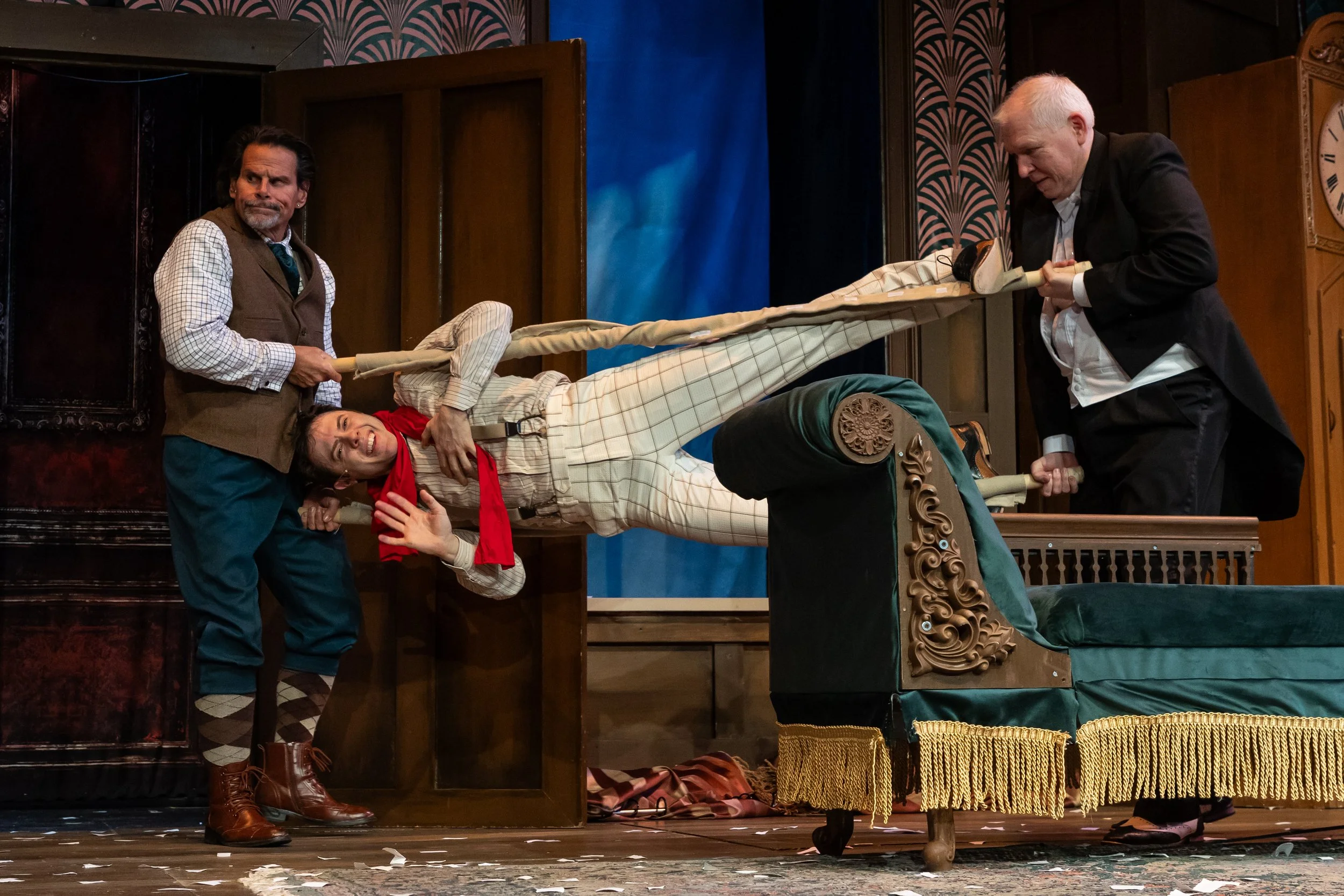
Play That Goes Wrong, photographer Casey Gardner-Ford
Too many older adults in metro Atlanta experience disconnection. They may live alone, have lost a spouse, face mobility challenges, or struggle to find spaces where they still feel seen, valued, and engaged. Isolation can quietly erode physical and emotional health, increasing the risk of depression, anxiety, dementia, and chronic illness.
The arts create pathways back to connection.
Whether through theatre, music, storytelling, painting, dance, quilting, spoken word, or creative writing, arts participation allows older adults to express identity, process grief, build friendships, and experience joy. The arts stimulate memory, improve mood, strengthen confidence, and remind people that growth and creativity do not expire with age.
For older adults, participation in the arts is not simply entertainment—it is belonging.
One of the most impactful strategies for addressing loneliness and age segregation is intergenerational arts programming. When older adults and younger people create together, everyone benefits.
Imagine seniors and elementary students writing family stories together. Teenagers learning oral history from elders and transforming those memories into performance pieces. Grandparents and grandchildren taking drumming classes side by side. College students helping older adults record digital memoirs. Community choirs that consist of folks from ages 8 to 88. How beautiful would these experiences be. The joy that we can curate across generations is limitless.
These experiences reduce stereotypes, build empathy, and strengthen community ties. Young people gain wisdom, patience, and historical perspective. Older adults gain energy, companionship, and renewed purpose. Both groups gain what our society too often lacks: authentic connection.
In a city as vibrant and diverse as metro Atlanta, intergenerational arts programming should be woven into libraries, senior centers, schools, parks, theatres, faith communities, and neighborhood gathering spaces. These sacred 3rd spaces anchor culture, create shared well-being, and inspire us all to be more evolved human beings.

Kim’s Convience, photographer Casey Gardner-Ford
A fully funded and sustained arts ecosystem means we would finally recognize creativity as essential infrastructure for a thriving society. It would mean older adults are not invisible after retirement. It would mean every resident—regardless of zip code, income, age, or mobility—has access to healing, beauty, expression, and connection.
As someone who works at the intersection of aging and community wellbeing, it would mean hope. Hope that we are building a region where people can age with dignity, joy, and purpose. Art has the power to bring us all together. One story, one relationship, and one joyful moment at a time.
For organizations serving the public, sustained arts investment would create the stability needed to plan boldly and serve deeply. Instead of operating from grant cycle to grant cycle, organizations like the Aurora Theatre could build long-term programs with measurable impact. Most importantly, it would allow organizations to move from survival mode into transformation mode.
Atlanta has the talent, institutions, creativity, and civic spirit to become a national leader in creative aging and arts-for-health innovation. House Resolution 1007 offers a timely signal that Georgia is ready to think bigger.
During Older Americans Month, let us commit to more than celebration. Let us invest in systems that allow older adults to thrive. Let us fund intergenerational arts programs that heal social isolation and depression. Let us treat the arts as a core component of community health.
A fully funded arts ecosystem is not just good cultural policy. It is smart aging policy, smart health policy, and smart community policy.
And for thousands of older adults across Atlanta, it could be life changing.