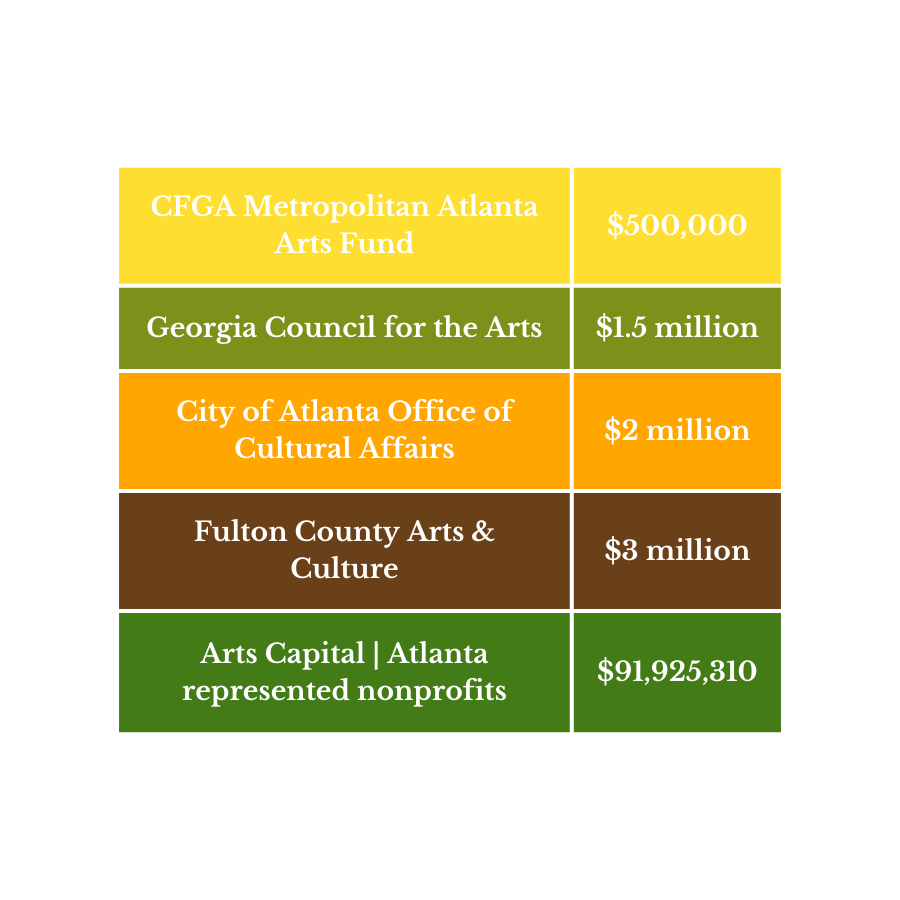
The Metro Atlanta Arts Ecosystem
Metro Atlanta is home to a dense and diverse arts ecosystem spanning disciplines, communities, and geographies.
Arts organizations operate across all 11 counties of the metro region, contributing to cultural life well beyond the urban core.
Metro Atlanta Arts Orgs by Primary Artistic Discipline
Across Metro Atlanta, nonprofit arts organizations work in dozens of artistic disciplines. Music, dance, and theater represent the largest clusters, alongside a wide array of visual, literary, film, design, and multidisciplinary practices, illustrating the scale and diversity of the region’s creative ecosystem.
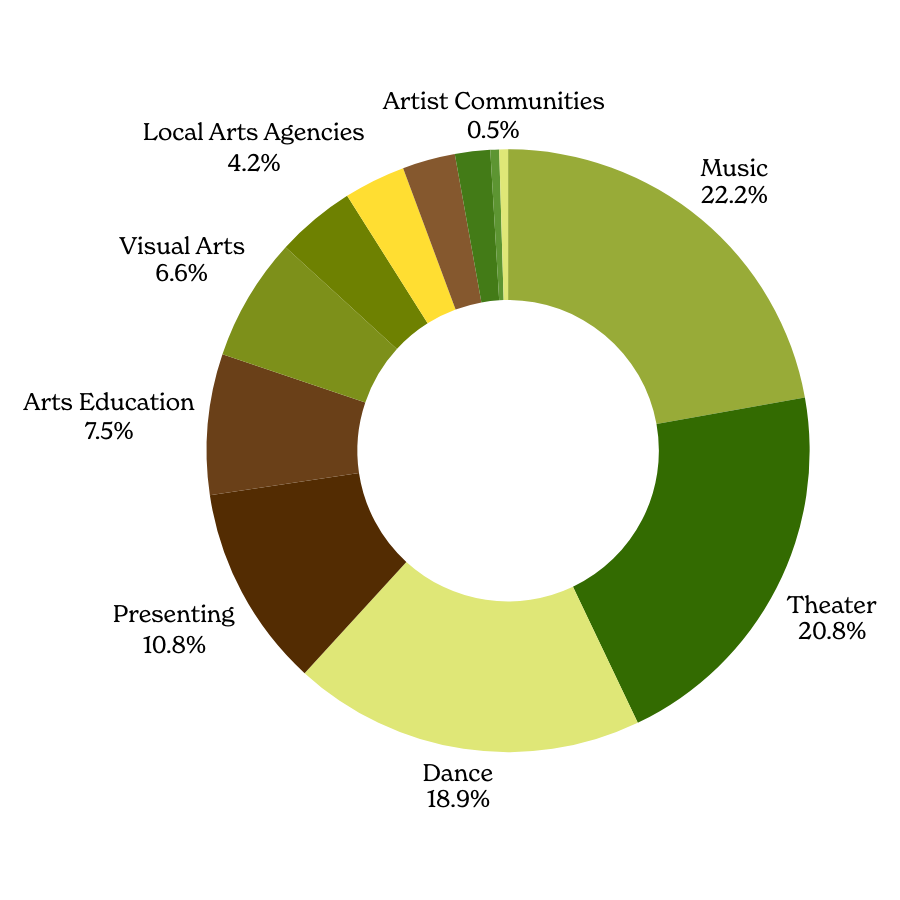
Arts Capital | Atlanta estimates there are approximately 210 operating arts nonprofits in the 11-county metro region with annual operating budgets between $5,000 - $20 million.
Mission Areas Across the Arts Ecosystem
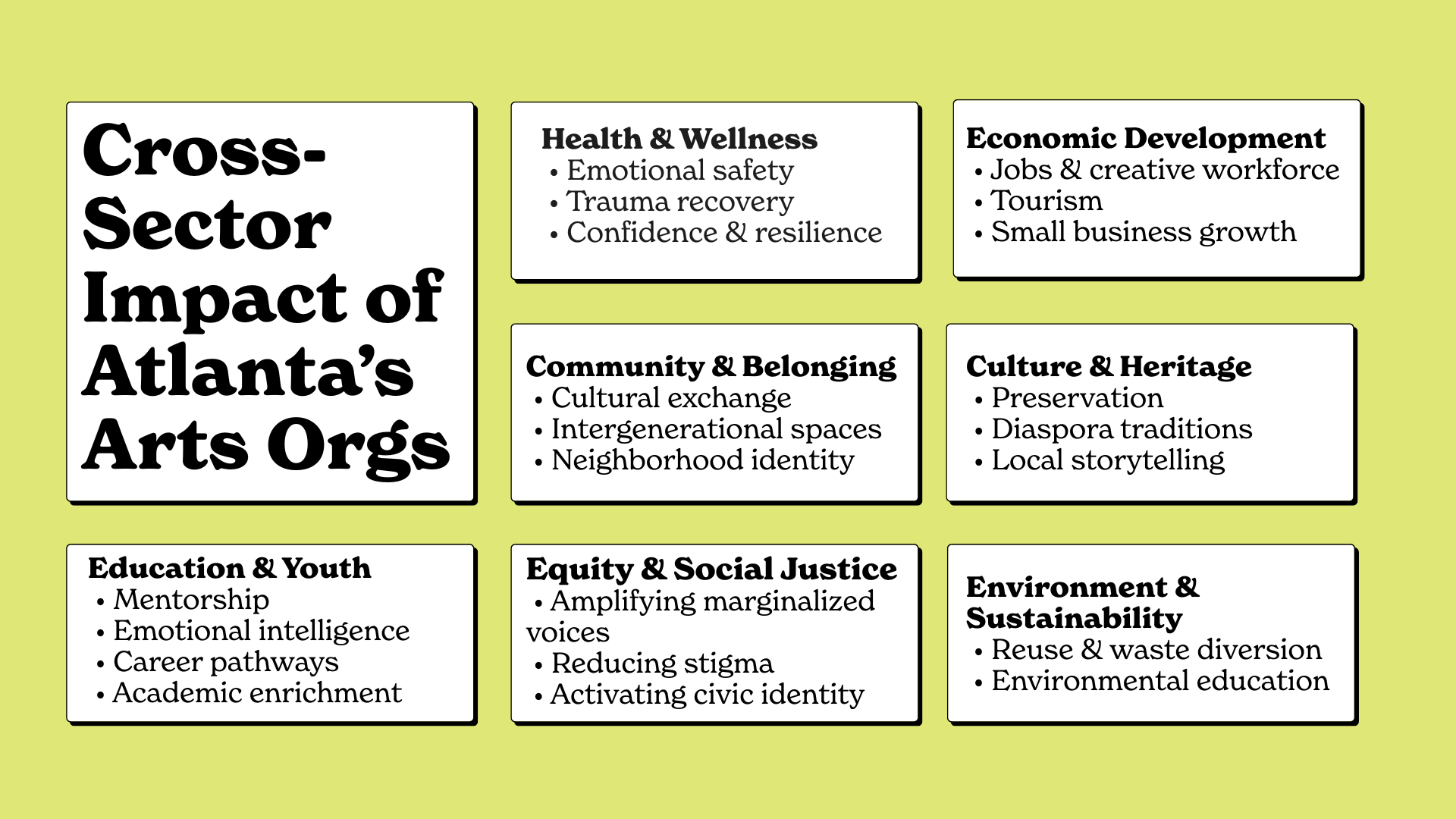
An analysis of mission statements from nearly 210 nonprofit arts organizations shows the arts at work across many dimensions of community life.
From education and workforce development to health, civic engagement, cultural preservation, and neighborhood vitality, these organizations use creative expression to meet social needs and strengthen local systems.
The result is an ecosystem where artistic work and community impact are deeply intertwined.
Organizational Size & Scale
Metro Atlanta Arts Organizations by Annual Operating Budget
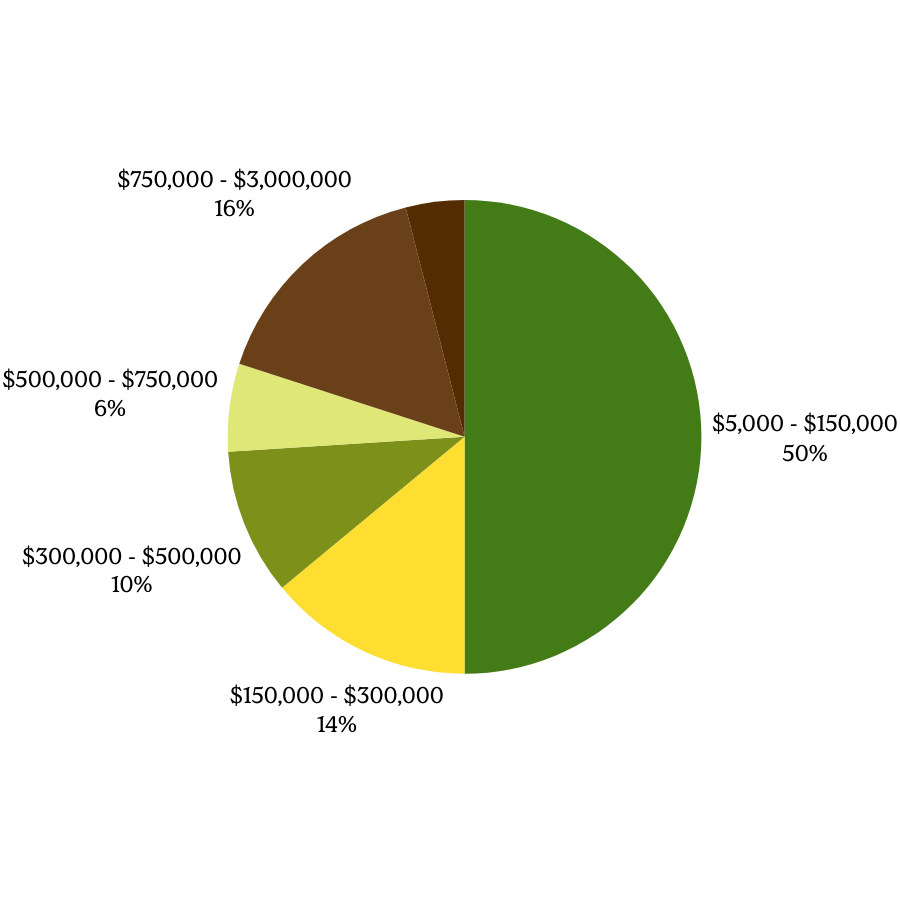
Half of Metro Atlanta arts nonprofits operate on annual budgets under $150,000.
National nonprofit data shows the majority of public charities are small, highlighting that Atlanta’s arts ecosystem is part of a broader ‘long tail’ of small organizations operating with limited scale.
With an annual budget of approximately $130 million, the Woodruff Arts Center alone exceeds the combined budgets of all other Metro Atlanta arts nonprofits (approximately $92 million).
This concentration of resources shapes the local funding, talent, and audience landscape, creating significant competitive pressure for smaller organizations operating with far fewer financial and institutional advantages.
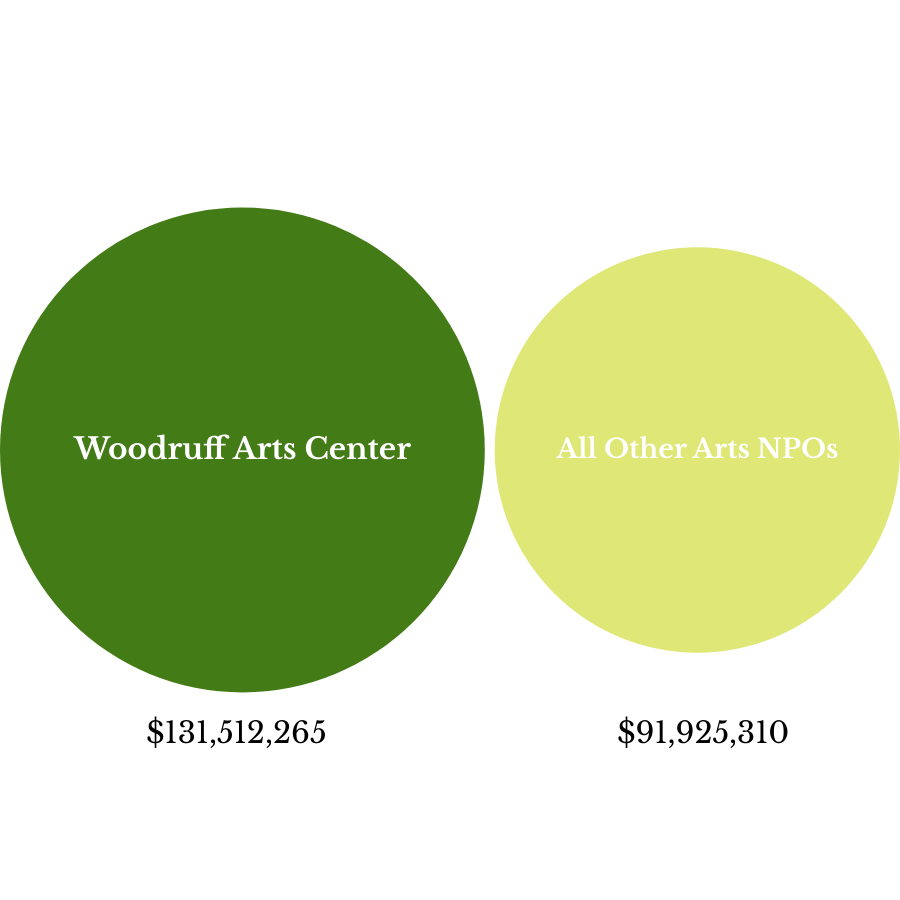
Annual Operating Budgets: Woodruff Arts Center vs. All Other Arts Nonprofits
Organizational Precarity & Workforce Structure
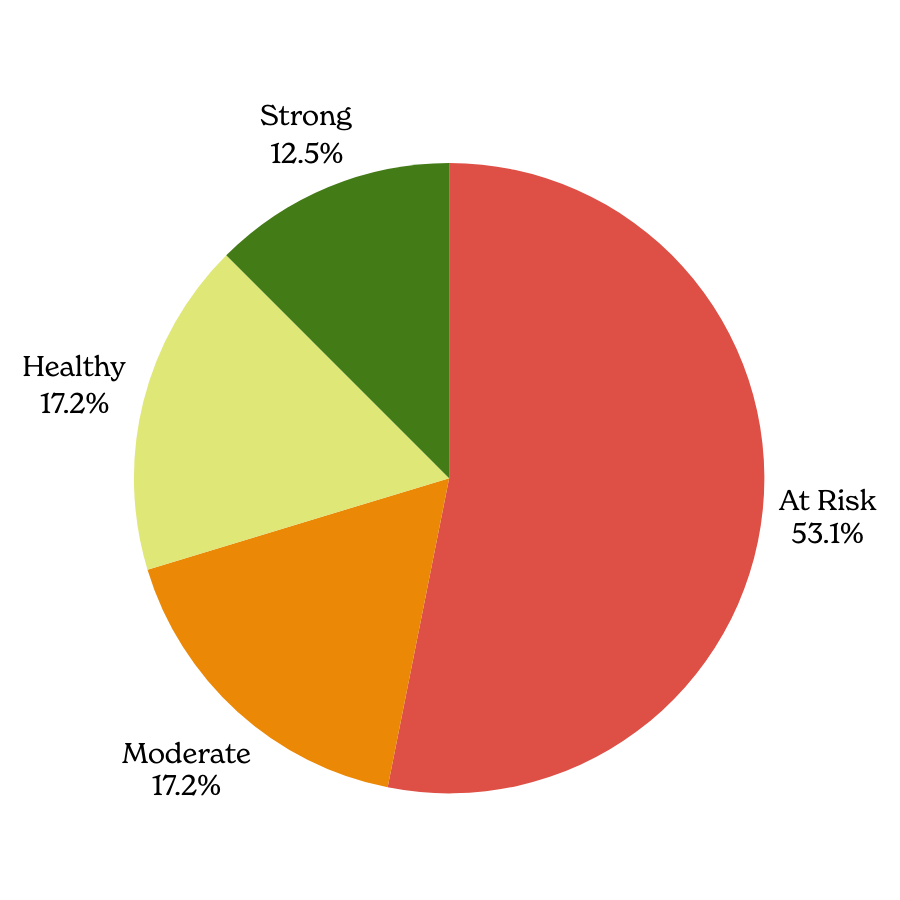
Organizational Health Based on Available Reserves
Operating reserves are unrestricted funds available to cover expenses during revenue disruptions or unexpected costs, providing essential financial runway. Leading practice suggests nonprofits maintain at least six months of operating reserves.
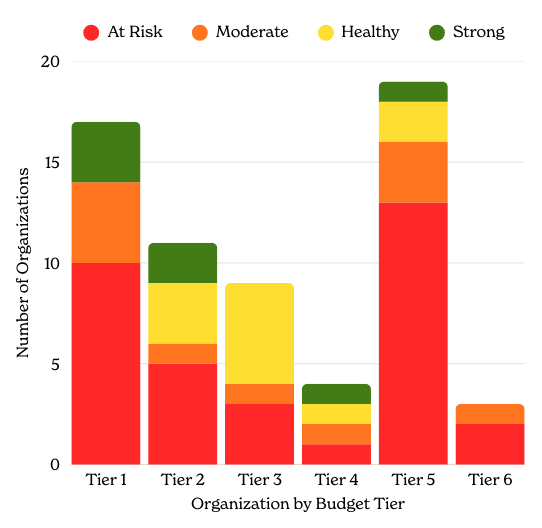
An analysis of Metro Atlanta arts nonprofits shows that most organizations fall into the At Risk (0–3 months) or Moderate (3–6 months) reserve tiers, with far fewer reaching Healthy (6–12 months) or Strong (12+ months).
Reserve levels show no meaningful correlation with organizational age, artistic discipline, leadership demographics, or headquarters location, indicating that financial fragility is widespread and structural rather than a function of individual organizational characteristics.
A recent AC|A survey yielded the following insights on arts organizations’ operating reserves:
-
![]()
No clear correlation between budget size and available reserves
-
![]()
No clear correlation between organization age and available reserves
-
![]()
No clear correlation between discipline and available reserves
-
![]()
No clear correlation between BIPOC/ALAANA leadership and available reserves
-
![]()
No clear correlation between organization headquarters and available reserves




Percent of Metro Atlanta Arts Nonprofits with an Endowment
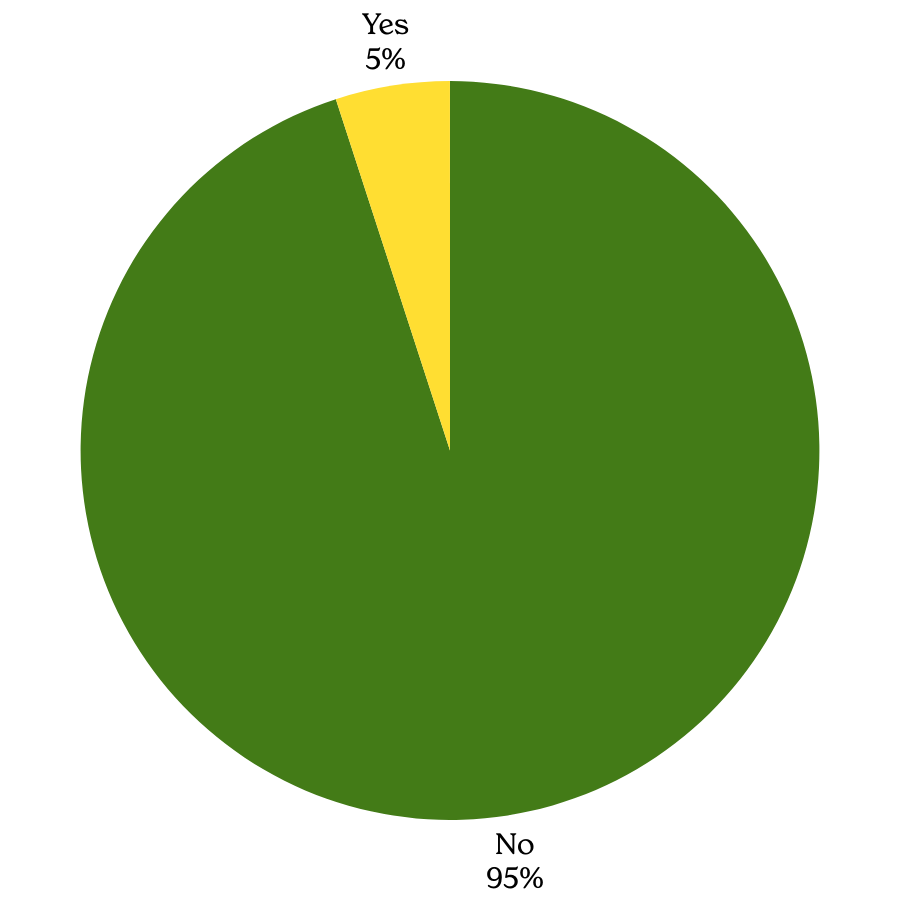
Endowments provide long-term financial stability by investing funds and using earnings to support ongoing operations. Fewer than 5% of Metro Atlanta arts nonprofits have an endowment, leaving most organizations without a durable financial cushion.
Taken together, staffing models, reserve levels, and the absence of long-term capital reveal a sector operating with limited financial and human buffers.
Many arts organizations rely on lean full-time teams, extensive contract labor, and short financial runways, leaving little margin to absorb disruptions, invest in staff, or plan beyond the near term.
Median Reported Staffing
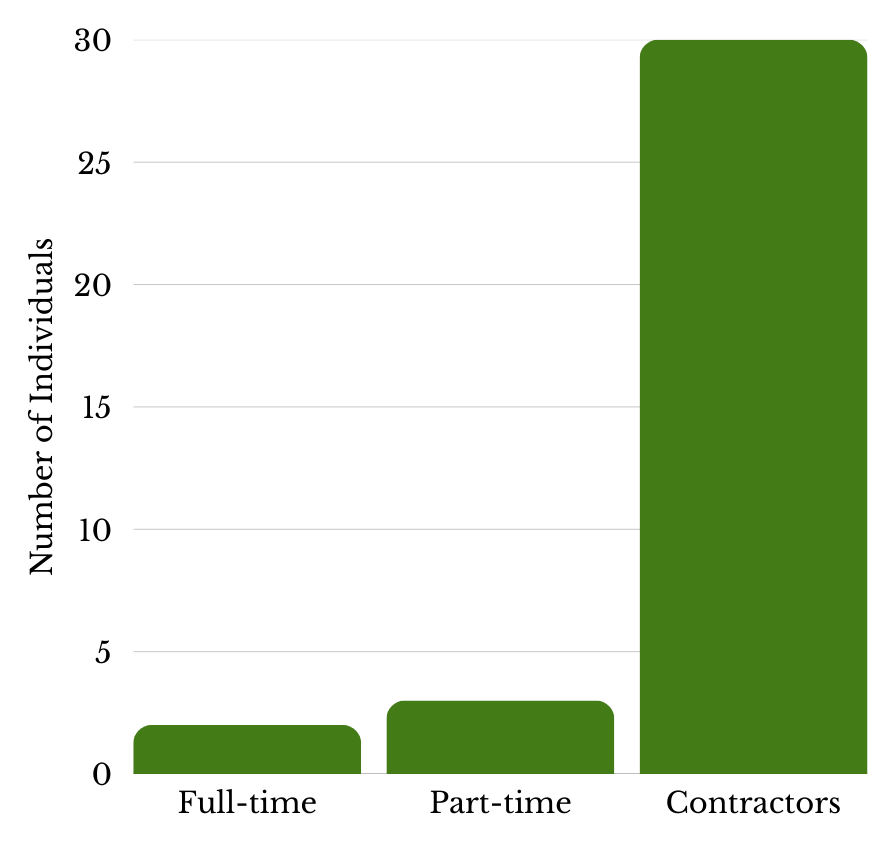
Most arts nonprofits operate with lean full-time teams supported by large networks of contract and freelance workers, reflecting a gig-heavy staffing model across the sector.
Public Investment in the Arts
Georgia has ranked for years near the bottom nationally—49th or 50th—for per capita public arts spending.
The National Assembly of State Arts Agencies estimates Georgia will rank 55th among U.S. states and territories, with just $0.14 per person in state arts funding.
The national average for public arts funding is $5.44 per capita, while the Atlanta metro receives approximately $1.96 per capita from federal, state, and local sources.
This results in a $3.48 per-person funding gap, equivalent to roughly $18 million annually in unmet public arts investment across Metro Atlanta.


Projected Per Capita Legislative Appropriations to State Arts Agencies
Fiscal Year 2026